Solar panel installation
Run to the international ISO 9001:2015 standard: survey, design, installation and maintenance of solar systems.
A W&W Energy service
Products and services
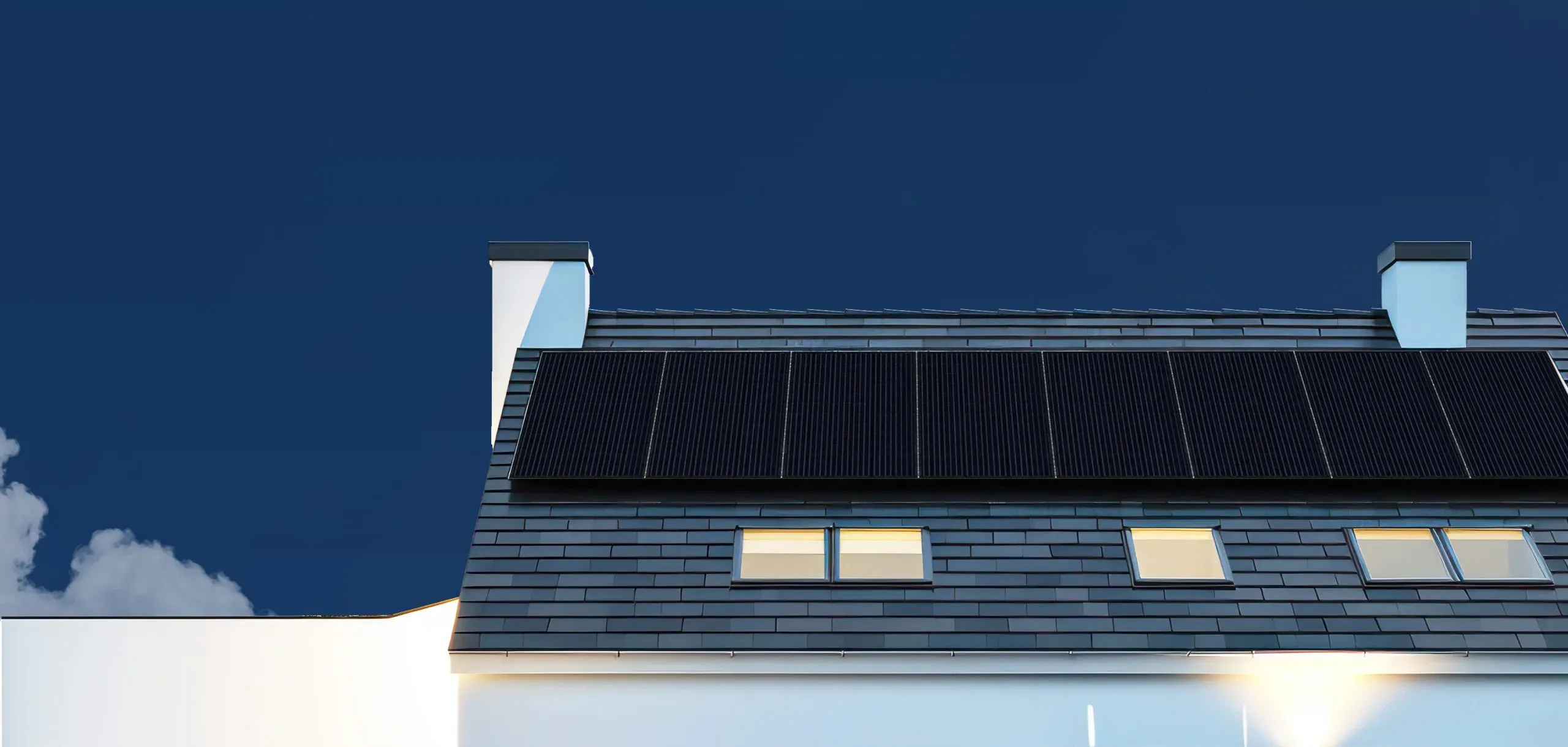
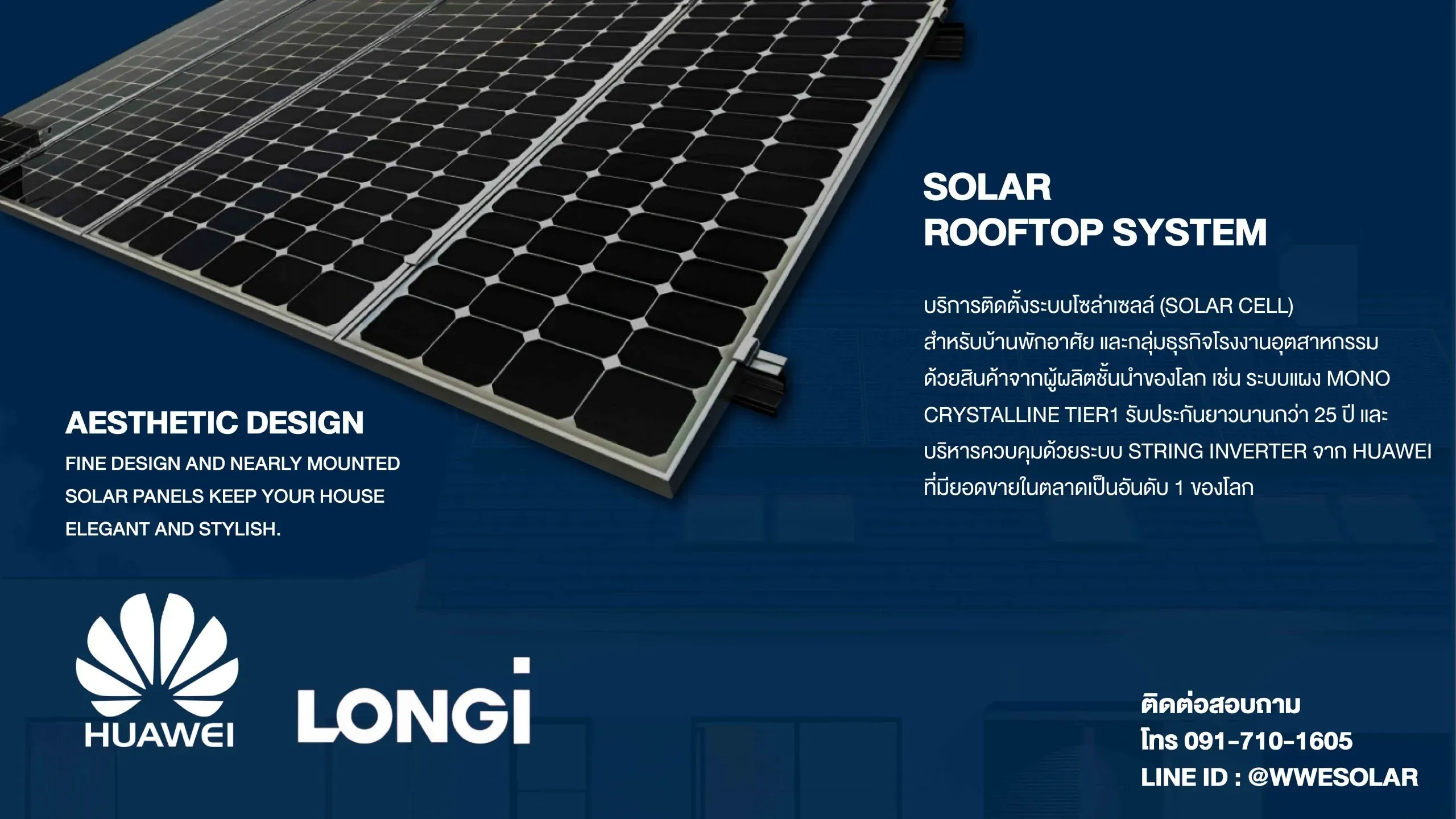
Rooftop solar systems for homes, businesses and factories, built with products from leading manufacturers, such as Tier 1 monocrystalline panels with a performance warranty of more than 30 years, managed by Huawei inverters, the world's best-selling brand.
Our track record
- provinces
- 77
- installation teams
- 57
- projects
- 2,115
- kW of solar installed
- 56,304
How installation works
Werwind Energy Solar offers a complete solar service: advice, site survey, calculation and installation design in every province of Thailand.
Consultation
Experienced sales staff give you personal advice.
Survey
We inspect and record the site, including aerial photos.
Design
Electrical and civil engineers calculate and design the structure.
Installation
Experienced teams carry out and supervise the installation.
Permits
We apply to the electricity authority for you.
After-sales service
Call-centre staff and engineers support you nationwide.
Solar installation prices
S Pack 3 kWp
Regular price
129,000THBOffer price115,000THB
Excludes VAT
Details
- Saves about 2,000 baht a month on electricity
- 6 solar panels
- Needs 15 m² of roof
- Runs 2 air conditioners, 1 TV and 1 fridge
- Pays back in about 5 years
M Pack 5 kWp
Regular price
189,000THBOffer price159,000THB
Excludes VAT
Details
- Saves about 3,000 baht a month on electricity
- 9 solar panels
- Needs 22 m² of roof
- Runs 3 air conditioners, 2 TVs and 2 fridges
- Pays back in about 5 years
L Pack 10 kWp
Regular price
299,000THBOffer price269,000THB
Excludes VAT
Details
- Saves about 6,000 baht a month on electricity
- 18 solar panels
- Needs 44 m² of roof
- Runs 6 air conditioners, 4 TVs and 2 fridges
- Pays back in about 4 years
- Based on electricity at 4.7 baht a unit and about 5 hours of daytime use a day.
- Appliances assume a 9,000 BTU air conditioner, a 55-inch TV and a 12-cubic-foot fridge.
- Prices include installation and the electricity-authority permit, exclude 7% VAT and may change with the site and its conditions.
- Free system maintenance and panel cleaning for 2 years.
Install solar now and get True Online home internet free for 36 months
When you install solar with W&W Energy
- Free True Online home internet (worth 47,000 baht)
- Free deposit and installation (worth 2,600 baht)
- Free joining fee (worth 2,000 baht)

Solar basics
What is a solar system?
A solar system turns sunlight into electricity. It is made of solar panels, an inverter and the wiring that connects them. The panels take in sunlight and produce direct current (DC); the inverter converts it to alternating current (AC), which powers your home together with electricity from the utility meter.
This is called an on-grid system. It is very popular for homes and factories because it uses solar power during the day and switches to the utility supply at night.
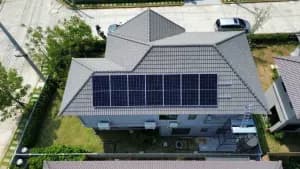
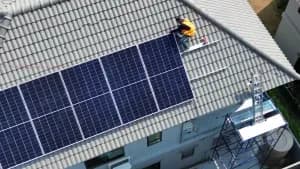
How is solar installed?
A rooftop solar installation needs careful planning. The roof's strength, size and direction should be assessed so the panels produce as much power as possible. Choosing the right panels and inverter matters too, and most important of all is choosing a professional, trustworthy installer such as WERWIND Energy.
Surveying the site
Certified WERWIND Energy engineers spend about 1–3 hours surveying the site. They start with drone photos to see the roof type, anything that makes the roof hard to reach and which way the panel area faces, and assess whether the roof structure can carry the panels.
Next they check where the inverter and the AC/DC cabinet will connect to the house wiring and how the cables will run, then agree with you on placements that look right and let the system work at its best.
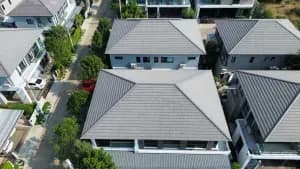
Designing the system
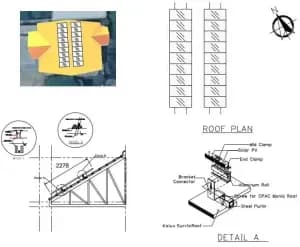
After the survey, the data goes to WERWIND Energy's solar engineers, who design the system with internationally certified software. They calculate the roof's load and strength and the mounting direction that produces the most power.
In Thailand the best direction is south: the sun rises in the east, sets in the west and arcs to the south during the day, so a south-facing roof gets the most light. The team also picks certified mounting hardware that suits your roof. Design takes 1–2 days before installation starts.
Installing the panels
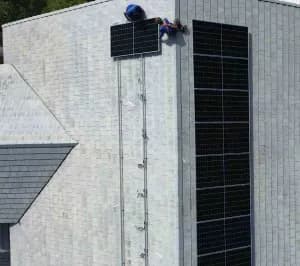
Installation starts with scaffolding or a ladder to the roof. Every WERWIND Energy installer is trained for working at height and wears protective equipment such as a full-body harness before fitting the panel mounts to the roof as designed.
With a string inverter, the panels are linked with standard MC4 connectors and the cables run in conduit down to the inverter inside. With microinverters, a microinverter is fitted under each panel on the roof and the panels connect to it directly.
Installing the inverter
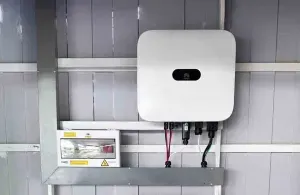
The inverter converts the panels' direct current (DC) into the 220 V alternating current (AC) used at home, and connects to the utility supply through an AC/DC combiner box installed next to it. The box contains breakers and earthing to protect against short circuits.
Testing the system
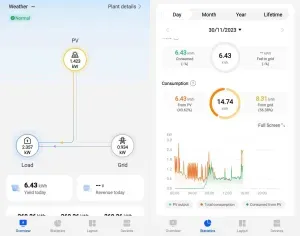
The last step before you start using the system is commissioning: testing and configuring it in the inverter's app. Huawei inverters use the FusionSolar app, which shows production in real time, both what the panels generate and what your appliances use, and raises an alarm when something is wrong so it can be fixed straight away.
Maintaining the system
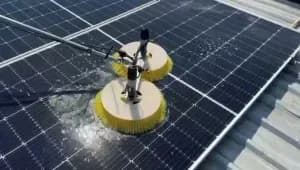
Rooftop solar is easier and cheaper to maintain than most people think. Clean the panels at least once a year, because dust, dirt and leaves reduce production. A clean cloth and a hose are enough; avoid harsh chemicals that can damage the panel surface.
Have an engineer check the wiring and connections from time to time, since worn wiring can be dangerous or make the system misbehave. WERWIND Energy covers this care for 2 years, including fault checks by its engineers. The cleaning and inspection routine is:
- Check the panels for cracks (visually or by photo); replacements fall under the manufacturer's warranty.
- Check the whole panel structure (visually or by photo), including the mounts.
- Check that no cable sags or hangs loose (visually or by photo), and route cables correctly.
- Check that terminals are tight (by touch) to prevent arcing.
- Check the inverter and other electrical equipment with a multimeter, and clean them.
- Check protective devices, breakers and fuses with a multimeter, and clean them.
- Check the mounting bolts and tighten them to the standard 13–15 N·m.
- Check the weather sensors, monitoring and control systems, and clean them.
- Test the earthing with an earth tester to prevent over-voltage damage.
- Scan panels and equipment with a thermal camera to measure their temperature.
- Run an I-V curve test to find the cause when production drops.